Built for mountain & desert homes
Frozen lines in Jackson and Flagstaff, hard water in St. George, high-altitude heaters in Durango — we know your climate.

Trenchless Sewer Repair
The old way to replace a sewer line was to dig it up end to end. That means a trench through the lawn, the garden, sometimes the driveway or a patio, and the cost of putting it all back afterward. In rocky mountain ground or dense desert soil, digging is slow work too. Trenchless methods reach the same pipe through one or two small openings instead, which is why trenchless sewer line replacement cost includes so little restoration.
Lining cures a new, jointless pipe inside the old one, sealing cracks and root entry points. Pipe bursting pulls a new line through the old path, breaking the worn pipe apart as it goes. Not every line qualifies, so we start with a camera and tell you honestly whether trenchless fits your pipe, its layout and its condition. If it doesn’t, we’ll explain conventional sewer line repair and price both, so you can compare.
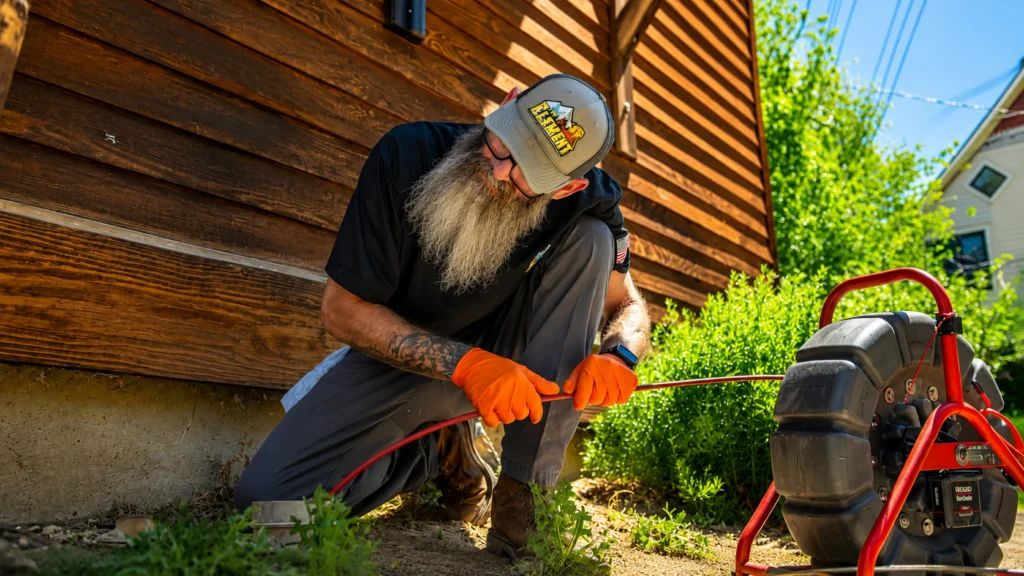
Is It a Fit?
These situations favor lining or bursting over open digging.
The sewer passes beneath a driveway, patio or walkway you’d rather not break.
Roots keep returning along the line, and a liner closes every joint at once.
The pipe is cracked or corroded but hasn’t fully collapsed.
Established trees, gardens or xeriscape sit right over the sewer path.
Volcanic rock, caliche or packed clay that makes trenching slow and costly.
Old pipe that’s near the end of its life but still holds its shape.
Methods We Use
The camera footage decides which method, or combination, will do the job.
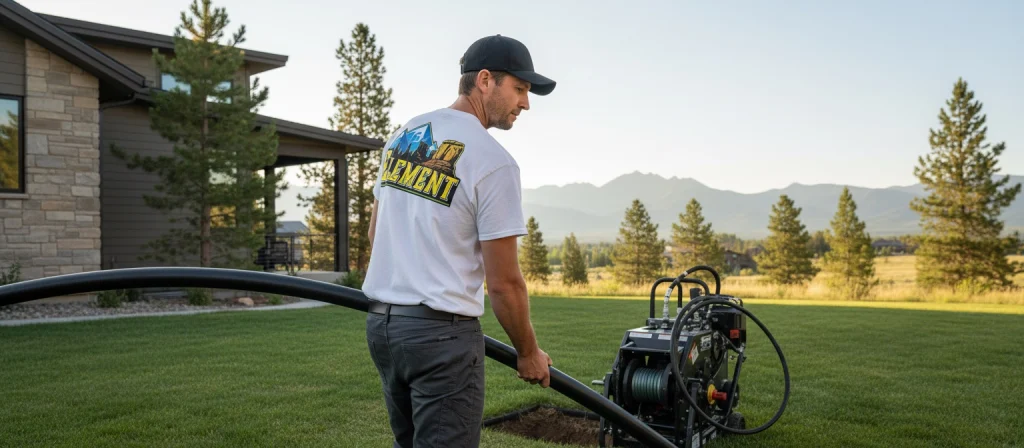
How It Works
Length and depth of the line, the condition of the pipe, how many access points it needs and whether lining or bursting fits set the price. Here’s how we get to a firm number.
We record the line, measure the damaged length and check access points.
You see trenchless and conventional prices side by side, then choose.
The pipe is cleaned, then lined or burst and replaced through the access points.
A final camera pass shows the finished line before we backfill.
Frozen lines in Jackson and Flagstaff, hard water in St. George, high-altitude heaters in Durango — we know your climate.
Real offices and crews in St. George, Hurricane, Durango, Jackson and Flagstaff — not a call center.
Voted Best of Southern Utah Gold in 2025 and 2026, and Best of Iron County 2025.
Burst pipe at 2 a.m. or no heat on a Sunday — a real technician answers the call.
Find out if trenchless will work for your line. Estimates are free, and $50 off any plumbing service applies.
Maintenance Membership
Seasonal checkups for every system in your home.
Seasonal checkups catch small problems before they become emergencies — and keep your systems running efficiently all year.
All four. See what your local team offers: Flagstaff, Durango, St. George and Hurricane, or Jackson. Each starts with a camera inspection, because the condition of your pipe decides whether trenchless is possible. Estimates are free at every location.
No. A line that has fully collapsed, has a deep sag, or changes direction sharply may not take a liner or a bursting head. In those cases a conventional repair can cost less and last just as well. We’ll show you the footage and give you an honest comparison rather than pushing one method.
Slightly, by the thickness of the liner. In practice the smooth, jointless interior usually carries waste as well as or better than the rough, scaled pipe it replaced. Pipe bursting, by contrast, can keep the same size or even step it up, which is one reason we may recommend it for a badly worn line.
Yes, once the roots are removed. We clean the pipe first, often with hydro jetting, then install the liner. Because a cured liner has no joints, roots lose the gaps they used to grow through. If roots have crushed part of the pipe, that section may need bursting or excavation instead.
You’ll get the full price to approve before work starts, and estimates are free. If the repair is more than you planned for, ask about our financing options. Many homeowners find the total compares well with digging once lawn, concrete and landscaping repairs are counted.
Nationally, lining or bursting a typical residential sewer line often runs about $4,000 to $15,000, with per-foot pricing commonly in the $80 to $250 range depending on the method. A short spot repair costs far less; a long, deep run under concrete costs more. Those are national ranges that vary by home. Element gives a written, upfront price for your home after the camera inspection, with the conventional option priced beside it.